South Dakota Fishing: Where to Go, What to Catch and What to Wear
South Dakota fishing divides into four distinct regions: the Missouri River reservoirs in the center of the state, the glacial lakes of the northeast, the prairie lakes and rivers of the southeast, and the cold trout streams of the Black Hills in the west. Walleye is the headline species statewide, with the Missouri River reservoirs offering more than 900 square miles of open water. Trout dominate in the west. A South Dakota fishing license is required for adults, issued by South Dakota Game, Fish and Parks, and the state holds more than 100 fish species overall.
This guide covers where to go by region, what you are likely to catch, and how to dress for open water, fly fishing and ice.
The Four Regions at a Glance
| Region | Character | Headline species | Best known for |
| Central, Missouri River | Four large reservoirs, more than 900 square miles of open water | Walleye, smallmouth bass, northern pike, catfish, Chinook salmon | Big water walleye fishing |
| Northeast, Glacial Lakes | More than 120 natural glacial lakes | Walleye, yellow perch, largemouth bass, northern pike | Ice fishing and perch |
| Southeast, Prairies | More than 175 lakes plus river systems | Walleye, panfish, bass, bullheads, catfish | Accessible bank and small boat fishing |
| West, Black Hills | Cold spring-fed streams and mountain reservoirs | Rainbow, brown and brook trout | Fly fishing and stream trout |
Licenses and Regulations
Licenses are issued by South Dakota Game, Fish and Parks. Resident youth under age 18 are not required to hold a fishing license, and nonresident youth under 18 who want to keep their own limit or fish on their own are also exempt.
| License type | Resident | Nonresident |
| Annual fishing | $31 | $80 |
| One day | $10 | $26 |
| Three consecutive days | Not applicable | $45 |
| Senior, age 65 and older | $17 | Not applicable |
Agent fees are not included in these prices. Fee schedules are set by the Game, Fish and Parks Commission and change periodically, so confirm current pricing at the point of purchase.
Daily and possession limits vary by species and by water body, and some waters carry specific rules that differ from statewide defaults. Those limits are published in the current South Dakota Fishing Handbook rather than being uniform across the state, so check the handbook entry for the specific lake or stream you plan to fish.
Flagged for local review: license prices, daily and possession limits, line limits, ice fishing shelter rules and any water specific regulations must be verified against the current South Dakota Fishing Handbook and the Game, Fish and Parks website before publication. Regulations are revised annually and border waters shared with Minnesota, Nebraska, Iowa, North Dakota, Montana and Wyoming carry separate rules.
Major Fishing Regions in Detail
The Missouri River Reservoirs
The Missouri River system through central South Dakota is the state’s flagship fishery. Four large reservoirs, Lake Oahe, Lake Sharpe, Lake Francis Case and Lewis and Clark Lake, together create an enormous amount of accessible water.
Walleye is the primary draw, and the scale of the system means productive water is rarely crowded. Smallmouth bass, northern pike, catfish and Chinook salmon are also present depending on the reservoir. Because these are managed reservoirs, water levels fluctuate significantly through the year, which changes where fish hold and which ramps are usable. Checking current conditions before a trip is worth the time.
Northeast and the Glacial Lakes
The northeast holds more than 120 natural lakes formed by glacial action. These are generally shallower and more fertile than the reservoirs, which supports strong walleye, yellow perch, largemouth bass and northern pike populations.
This region is the heart of the state’s ice fishing culture. Perch fishing in particular draws anglers through the winter, and the density of lakes means you can move between waters quickly when a bite goes quiet.
Southeast Prairie Lakes and Rivers
The southeast has more than 175 lakes alongside river systems, and it tends to be the most accessible region for anglers without a boat. Walleye, panfish, bass, bullheads and catfish are the common catches. For families and beginners, this region offers the shortest path from parking to a productive bank.
The Black Hills
The western corner is a different fishery entirely. Cold, spring-fed streams and mountain reservoirs support rainbow, brown and brook trout, which puts the Black Hills at odds with the walleye reputation that defines the rest of the state.
Fishing in the Black Hills
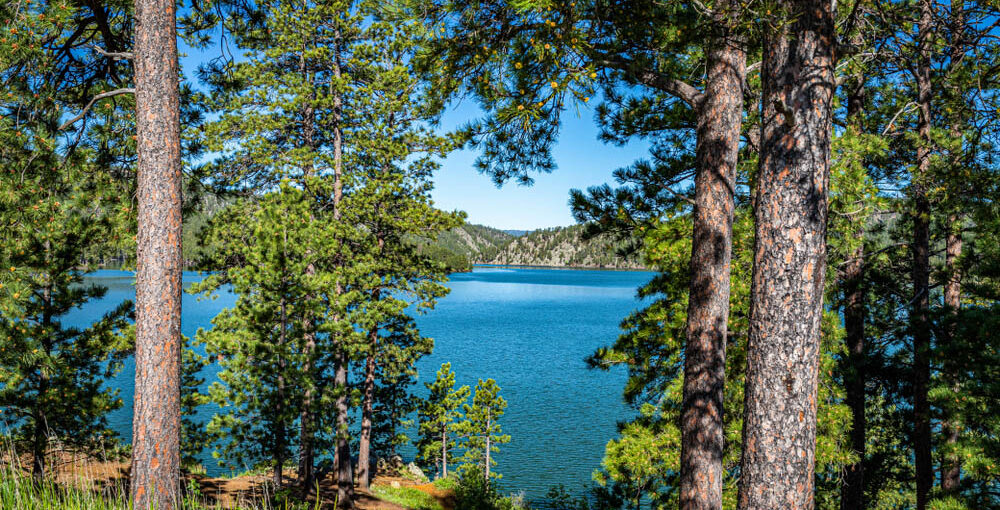
Rapid Creek and Spearfish Creek are the best known moving water, running clear and cold through canyon terrain. Pactola Reservoir, Sheridan Lake and Deerfield Lake are the reservoirs most anglers name first, with Pactola’s depth and clarity supporting cold water species.
A few practical notes for the region:
- Stream access can cross between national forest, state and private land within short distances, so confirm land status before you walk in.
- Stocking schedules affect fishing significantly on the reservoirs, and Game, Fish and Parks publishes stocking reports.
- Canyon water stays cold year round, which makes wading comfort a real consideration even in summer.
- Spring runoff can raise and cloud streams well into early summer.
If you are building a wider trip around the region, “trails, camping and access across Black Hills National Forest” covers the land management picture, which matters because access rules change as you cross agency boundaries.
Open Water Fishing Through the Season
Open water fishing in South Dakota generally runs from ice out in spring to freeze up in late fall, with the exact window shifting by region and year.
- Spring: fish move shallow as water warms. Walleye fishing near rocky shorelines and inflows can be excellent, though weather is unstable.
- Summer: fish move deeper during the day. Early mornings and evenings outperform midday on most waters, and sun exposure on open reservoirs is intense.
- Fall: cooling water triggers heavy feeding. This is often the best big fish window of the year and the least crowded.
- Late fall: fishing stays productive but conditions get serious. Wind on large reservoirs is the main hazard.
Across all four windows, the shirt against your skin should move sweat rather than hold it, which is why the performance T-shirts category is a better starting point than a cotton tee.
Fly Fishing in South Dakota
Fly fishing in the state is concentrated in the Black Hills, where spring-fed streams hold trout year round. The character is small water rather than big western rivers, with tight casting lanes, brushy banks and technical presentations.
Practical considerations for these streams:
- Shorter rods handle canyon streams better than long rods, because overhead room is limited.
- Approach matters more than fly selection on clear, low water. Trout in these streams see plenty of anglers.
- External felt soled boots and waders are not permitted in South Dakota waters, which visiting anglers frequently overlook. Choose rubber soled wading boots.
- Cold water and cold air combine to make wading uncomfortable faster than the air temperature suggests.
Ice Fishing
Ice fishing is a major part of the state’s angling calendar, particularly across the glacial lakes of the northeast. The state’s fishing handbook sets out rules that differ from open water, including a higher line allowance for ice fishing than for open water, and rules governing shelters. Shelter doors must permit entry at all times except when the shelter is unoccupied and locked. Border waters shared with Minnesota carry separate line limits and shelter removal deadlines.
Because you are sitting still for hours, insulation matters more than it does anywhere else in fishing. Heavier fleece weights, such as those in the outdoor hoodies range, work well as a mid layer under a windproof shell.
Ice safety is not regulated for you, and it is the part most likely to cause harm.
- No ice is guaranteed safe. Ice thickness varies across a single lake, especially near inlets, outlets, springs and pressure ridges.
- Check with local bait shops and current reports rather than relying on last week’s conditions.
- Carry ice picks worn on your person, not stowed in a bag.
- Fish with a partner and tell someone your plan.
- Vehicle travel on ice carries substantially higher risk than walking and requires far greater thickness.
What to Wear South Dakota Fishing
| Setting | Base | Mid | Outer | Priority |
| Summer open water | Lightweight long sleeve with sun protection | None worn | Light wind layer packed | Sun and glare management |
| Spring or fall boat | Midweight synthetic or merino | Fleece or insulated vest | Wind and spray shell | Wind chill over open water |
| Fly fishing, cold stream | Midweight, top and bottom | Fleece under waders | Wading jacket | Legs stay cold in moving water |
| Ice fishing | Heavyweight, top and bottom | Fleece plus insulated layer | Windproof shell, floating suit where used | Warmth while stationary and wind exposure |
Sun on the Water
Reflected light off water roughly doubles your effective exposure, and it hits places sunscreen usually misses, including the underside of the chin, the ears and the backs of the hands. A hooded long sleeve such as the OC Sun Shirt, a lightweight 92 percent polyester and 8 percent spandex knit rated UPF 50, addresses the neck and forearms directly. For warm days when you want less coverage, the Original OC Performance T-Shirt uses a moisture-wicking 88 percent polyester and 12 percent spandex fabric. Polarized sunglasses do double duty by cutting glare and letting you read water.Wind and Cold on Open Water
Wind chill on a moving boat is the most underestimated factor in spring and fall fishing. A packable layer such as the Spring Tide windbreaker in 100 percent polyester takes little space and makes a substantial difference on a run across open water. It is not described as waterproof on its product page, so bring a dedicated rain shell for spray and weather. For sitting still in cold air, an insulated puffer vest keeps your core warm while leaving arms free for casting and handling line. At the dock or in camp afterward, in dry conditions, the Dark Canyon Hoodie in 380 GSM cotton fleece is a comfortable recovery layer, though cotton fleece is the wrong choice for active wet weather use. If you want the underlying reasoning on fabric choice and layer order, see “how base, mid and outer layers work” For a broader seasonal breakdown covering footwear and headwear, see “dressing for the outdoors through the seasons”Fishing Trip Packing Checklist
- Current South Dakota fishing license, carried or accessible on your phone
- Copy of or access to the current fishing handbook for the water you are on
- Layered clothing matched to setting, with a wind layer even on calm forecasts
- Rain shell, since weather over open water changes quickly
- Polarized sunglasses and a brimmed hat
- Sunscreen and lip protection
- Rubber soled wading boots, not felt soled
- Dry spare clothing kept in a sealed bag
- Personal flotation device for every person aboard
- Ice picks, spud bar and a partner for ice fishing
- Landing net, pliers and a measuring device
- Bag for trash and used line
Safety and Responsible Fishing
Aquatic Invasive Species Rules
South Dakota enforces aquatic invasive species rules statewide, and they apply to every angler, not just boaters. The state summarizes them as clean, drain, dry, every time.
- All trailered boats must have drain plugs, bailers, valves and other drainage devices opened or removed, except while in a boat ramp parking area or while launching or loading.
- Lake and river water must not be transported away from the access area in bait buckets, livewells, coolers or other containers.
- Aquatic bait may only be transported away from a water body in domestic water such as tap, well or bottled water, or ice.
- Inspect the boat and trailer immediately after loading and remove any mud, plants, animals or debris.
- Lower the outboard’s lower unit to drain residual water before leaving the ramp.
- External felt soled boots and waders are not permitted in South Dakota waters.
General Safety
- Wind builds fast on the Missouri River reservoirs and can make an easy morning run difficult by afternoon.
- Cold water shock is a genuine risk in spring and fall, well before conditions look dangerous.
- Cell coverage is unreliable in canyon country and on remote reservoir arms.
- Handle fish you intend to release with wet hands and minimal air exposure.
Planning Your South Dakota Fishing Trip
South Dakota fishing offers unusual variety for a single state, from big water walleye on the Missouri to small stream trout in the Black Hills, with a serious ice fishing season connecting the calendar. Pick the region that matches the fishing you want rather than the one closest to your route, since the four regions fish very differently.
Buy the right license, check the current handbook for the specific water, respect the invasive species rules, and dress for standing still rather than for the air temperature. The brand behind this guide grew out of time spent outdoors in this part of the country, which you can read about in the Out Cold Outdoors background. It is also possible to put together a trip kit in one place before you head out.
Frequently Asked Questions
Do I need a fishing license in South Dakota?
Adults do. Resident youth under age 18 are not required to hold a license, and nonresident youth under 18 who fish on their own or keep their own limit are also exempt. Licenses are issued by South Dakota Game, Fish and Parks.
Where is the best fishing in South Dakota?
It depends on the species. The Missouri River reservoirs are the strongest choice for walleye, the northeast glacial lakes for perch and ice fishing, and the Black Hills streams for trout and fly fishing.
Can you fly fish in South Dakota?
Yes, primarily in the Black Hills, where cold spring-fed streams such as Rapid Creek and Spearfish Creek hold rainbow, brown and brook trout. Expect small, technical water rather than large western rivers.
What should I wear ice fishing?
A heavyweight base layer top and bottom, a fleece or insulated mid layer, and a windproof outer layer, since you are stationary and producing little heat. Insulated boots, a hat covering the ears and two glove weights matter as much as the torso layers.
Are felt soled waders allowed in South Dakota?
No. External felt soled footwear, including boots and waders, may not be used in South Dakota waters. The rule exists to limit the spread of aquatic invasive species, so bring rubber soled wading boots.
Editorial Sources
- South Dakota Game, Fish and Parks, license types and costs, resident and nonresident fishing licenses and youth exemptions: https://gfp.sd.gov/license-types/
- South Dakota Game, Fish and Parks, Fishing Handbook, license requirement, line limits, ice shelter rules and felt sole prohibition: https://gfp.sd.gov/userdocs/docs/fishinghandbook_online.pdf
- South Dakota Least Wanted, official aquatic invasive species laws, drain plug, water transport and bait rules: https://sdleastwanted.sd.gov/laws/default.aspx
- Travel South Dakota, fishing regions, lake counts, species overview and beginner resources: https://www.travelsouthdakota.com/things-to-do/outdoor-activities/fishing/beginner-resources
- USDA Forest Service, Black Hills National Forest recreation and reservoir information: https://www.fs.usda.gov/r02/blackhills
- Product fabric compositions and specifications verified against live Out Cold Outdoors product pages, retrieved September 2, 2026.
Editorial note: the fishing handbook edition consulted for line limits and ice shelter rules should be replaced with the current season’s edition before publication, and license prices re-checked, since both are revised on an annual cycle. No Out Cold Outdoors product referenced here is described on its product page as fishing-specific, and none should be edited to imply otherwise.